



















































































































The Good Governance Index Group has commended the leadership of the Nigerian Upstream Petroleum Regulatory Commission (NUPRC) and the Nigerian National Petroleum Company Limited (NNPC Ltd) for what it described as improved transparency, professionalism and financial discipline in the oil and gas sector.
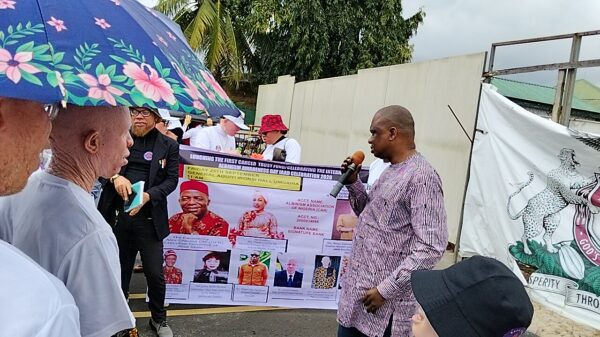
Speaking at a press conference in Abuja on Monday, Dr Olayemi Isaac, Executive Director of the group, said the recent licensing round conducted by the NUPRC demonstrated a level of openness and institutional discipline that should be encouraged rather than undermined.
Isaac said the process, which attracted 143 companies that submitted 200 bids for 37 of the 50 oil and gas blocks on offer, was evidence that Nigeria could create a competitive investment environment when petroleum assets were allocated through clearly defined rules.
“The licensing round represents an important test of Nigeria’s commitment to transparency in the management of its petroleum resources. From the participation of investors to the evaluation of bids and the involvement of relevant government institutions, the process showed that petroleum assets can be administered through a framework that is competitive, predictable and open to scrutiny,” he said.
The group noted that the 37 blocks that attracted bids cut across the Niger Delta, Benin Basin, Anambra Basin, Chad Basin and Benue Trough, describing the interest in frontier basins as particularly significant.
Idoko said the emergence of 31 successful companies from the process should not be viewed merely as an allocation of oil blocks but as an opportunity to expand exploration, attract fresh capital and increase Nigeria’s future production capacity.
He commended Oritsemeyiwa Eyesan, the NUPRC Chief Executive, for maintaining a transparent and professionally managed licensing process, particularly the commission’s emphasis on financial and operational commitments by successful bidders.
“What we have seen under the current leadership of the NUPRC is a deliberate attempt to move away from the culture of speculative acreage holding. The insistence that successful bidders must fulfil their obligations, pay the applicable signature bonuses and demonstrate the capacity to develop their assets is a welcome approach. The message that acreage must translate into investment, exploration and production is exactly what Nigeria needs at this stage of its petroleum industry,” he said.
Idoko also defended the commission against calls for Eyesan’s removal, saying allegations surrounding the licensing process should be subjected to evidence and proper institutional scrutiny rather than public speculation.
The energy expert said the NUPRC’s statutory responsibility under the Petroleum Industry Act should be recognised when assessing its role in the allocation of petroleum assets.
Turning to NNPC Ltd, the group said recent questions surrounding the company’s energy security expenditure required a careful reading of its audited financial statements.
Idoko specifically referenced the N7.13 trillion energy security expense reported for 2024, saying the figure should not, by itself, be presented as evidence of wrongdoing.
“The discussion around the N7.13 trillion energy security expenditure must be guided by the contents of the audited accounts and the legal framework under which the expenditure was incurred. The records explain that energy security costs included obligations arising from petroleum supply interventions, exchange-rate differentials and the protection of critical oil and gas infrastructure. These are issues that deserve scrutiny, but scrutiny must be based on documents, facts and proper interpretation rather than conclusions drawn from a headline figure,” he said.
The group also cited NNPC’s reported growth in crude oil production to 1.67 million barrels per day in April 2026, from 1.60 million barrels per day in 2025, as part of the performance indicators that should be considered in assessing the company.
Idoko said the figures did not mean that all challenges in the petroleum industry had been resolved, but argued that measurable progress should be acknowledged alongside legitimate areas of concern.
The group therefore gave a vote of confidence to Bayo Ojulari, NNPC Ltd’s group chief executive officer, and Eyesan, urging stakeholders to allow both institutions to focus on improving production, investment, transparency and regulatory efficiency.
“Removing the heads of these institutions on the basis of allegations that have not been substantiated would be counterproductive. What Nigeria requires is stronger oversight, better disclosure and continuous institutional accountability. Where there are concerns, let the evidence be examined and let the appropriate institutions do their work. We should not confuse criticism with accountability or accusation with proof,” he said.
Idoko also urged civil society organisations to adopt a more evidence-based approach in scrutinising public institutions, saying the Freedom of Information Act provides a legitimate avenue for obtaining information and seeking clarification.
He said CSOs should engage the NUPRC and NNPC Ltd directly where they require explanations, rather than relying primarily on media appearances to advance claims that may not have been sufficiently investigated.
The group said it would continue to monitor the operations of both institutions while encouraging greater disclosure and public accountability in Nigeria’s petroleum sector.