




























































lNorthern Nigeria’s political landscape ahead of the 2027 elections is undergoing a quiet but consequential realignment. For much of the period since the inauguration of the Renewed Hope administration, many northern political actors maintained a tactical distance from open campaigning for President Bola Ahmed Tinubu in the core North. The principal reason was not ideological hostility but electoral calculation.
The administration’s hardline economic reforms, fuel subsidy removal, exchange-rate unification and the broader fiscal reset have imposed immediate costs on households and businesses.
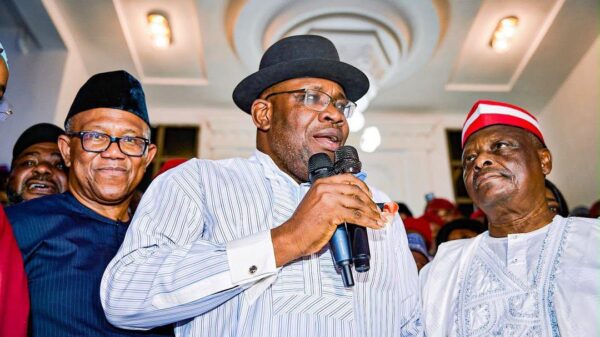
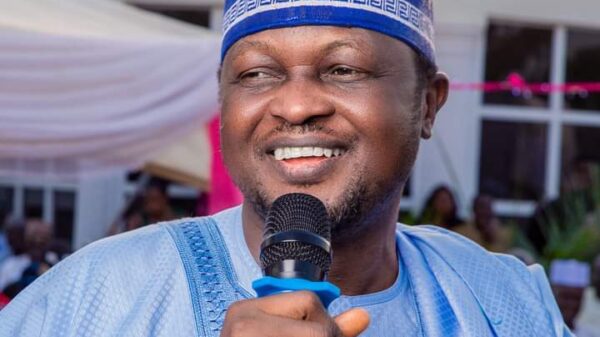
In a region where poverty and livelihood pressures remain acute, politicians feared that visible association with these policies could cost them local goodwill. That hesitancy is now being systematically dismantled by Arewa for Asiwaju (A4A), one of the most visible and organisationally coherent pro-Tinubu mobilisation platforms to emerge in the North. Conceived as the organised northern vanguard for the President’s re-election, the movement has assembled a 14-member Board of Trustees chaired by former Kano State Governor and ex-Education Minister Senator Ibrahim Shekarau, with former Yobe Governor and Minister of Police Affairs Senator Ibrahim Geidam and former Plateau Governor Senator Simon Bako Lalong as deputies. Former Defence Minister Mohammed Badaru Abubakar serves as Director-General of the National Directorate.
The structure spans all 19 northern states and the FCT, with specialised directorates, state and local coordinators, and a deliberate grassroots architecture. Key Recent Activities and Milestones
A4A has moved rapidly from formation to operational deployment. Vice President Kashim Shettima and other key party stakeholders officially commissioned the A4A National Campaign Headquarters in Abuja, establishing a central operational base for coordination across the North. The group has also rolled out a digital 2027 Election Intelligence & Analytics Portal designed to track data, coordinate strategy and manage mobilisation efforts in real time.
In Kaduna, A4A announced plans to mobilise 10,000 supporters drawn from all 19 northern states and the FCT for APC/Tinubu campaign activities. In Kano, the group held a formal event to unveil 528 A4A Youth Ambassadors, simultaneously driving digital and community-level youth registrations.
Grassroots and zonal strategy sessions, including those led by regional figures such as Yahaya Bello in the North-Central, have focused on aligning state and local government coordinators for a house-to-house campaign approach across northern wards and polling units.
States and Key Locations Visited
The national executive team has maintained a strong presence in Abuja.
They visited the Presidential Villa to meet with Vice President Kashim Shettima, held briefings at the APC National Secretariat with party chairman Professor Nentawe Yilwatda, and the FCT chapter conducted outreach visits to local traditional rulers, including the Sa’peyi of Garki, to solicit royal blessings and community endorsement.
In Kano State, the core leadership delegation travelled for the grand launch of the 528 A4A Youth Ambassadors. Following the event, they paid an official courtesy visit to the Kano State Government House to engage with Governor Abba Kabir Yusuf.
In Kaduna State, A4A leaders and local coordinators moved to coordinate the 10,000-person delegation drawn from across the North to support broader APC campaign activities. The Kaduna chapter also held closed-door strategic planning meetings to solidify ward-level deployment.
In Taraba State, the movement organised a large-scale youth solidarity march in Jalingo, the state capital, to demonstrate presence and mobilisation capacity in the North-East.
What distinguishes A4A is its dual offline-and-online intensity.
On the ground it has staged mobilisation rallies, appointed youth ambassadors, targeted large turnouts for campaign flag-offs, and compiled detailed catalogues of federal projects to counter narratives of regional neglect. Online, the hashtag #ArewaforAsiwaju has become a recurring fixture in northern digital spaces. Vocal northern influencers and content creators, including figures such as Abdurahman Leme, Waspapping, Yellow, Kawu Garba and others have consistently amplified the hashtag, driving engagement that has repeatedly placed it among trending political conversations. The content is not mere sloganeering; it systematically highlights tangible interventions under the Tinubu administration in the North, shifting the discourse from short-term hardship to medium-term institutional and infrastructural gains.
This narrative shift is grounded in observable outcomes, particularly in security and infrastructure. Under the coordination of National Security Adviser Nuhu Ribadu, security operations have recorded measurable progress against banditry and terrorism. Prominent bandit commanders—including Halilu Sububu, Boderi Isyaku, Buharin Yadi and others have been neutralised.
Thousands of hostages have been rescued, illegal arms recovered in large numbers, and key corridors such as the Abuja-Kaduna highway restored to greater usability, including night travel in certain periods. In the North-East, significant numbers of fighters and family members have surrendered while operational capacity of remaining groups has been degraded. While insecurity has not been eliminated, the scale and frequency of large-scale attacks have declined relative to the peak years preceding 2023, contributing to a modestly safer operating environment across parts of northern Nigeria.
President Tinubu’s decision to entrust Ribadu with the ONSA—building on earlier political support for him as the ACN presidential candidate in 2011 has placed a northern professional with institutional credibility at the centre of the security architecture.
Infrastructure delivery further undercuts claims of neglect. Minister of Works David Umahi has stated that the North accounts for more than 60 per cent of the administration’s legacy road projects. Flagship interventions include accelerated work on the Abuja-Kaduna-Zaria-Kano corridor (with substantial sections completed using reinforced concrete pavement in timelines far shorter than previous efforts), progress on the Sokoto-Badagry Superhighway, the Gombe-Biu segment of the Akwanga-Maiduguri corridor, and multiple North-East routes.
In Taraba, long-standing demands are being addressed through the Bali-Serti-Gashaka-Gembu Road and the Gembu-Mbamnga-Yang corridor linking border communities—projects that reconnect historically underserved areas and support trade, agriculture and mobility.
Complementary works include the Tungo-Karamti Road linking Adamawa and Taraba, rehabilitation of the Kashimbila-Takum axis, and numerous other federal interventions across the North-West, North-East and North-Central zones. These are not abstract promises; many are under active construction or have reached advanced stages, with direct implications for market access, security logistics and economic activity.
The broader political argument advanced by A4A and its supporters rests on continuity and reciprocity.
President Tinubu has a documented history of political support for northern figures. When former Vice President Atiku Abubakar was forced out of the PDP ahead of the 2007 election, Tinubu provided a platform under the Action Congress. In 2011 he backed Nuhu Ribadu’s presidential bid under the Action Congress of Nigeria. He subsequently played a central role in the 2015 and 2019 victories of the late President Muhammadu Buhari. After eight years of a northern presidency under Buhari, equity and the informal principle of rotational balance require that a southern president who has consistently engaged and trusted northern partners be allowed to complete a full eight-year term.
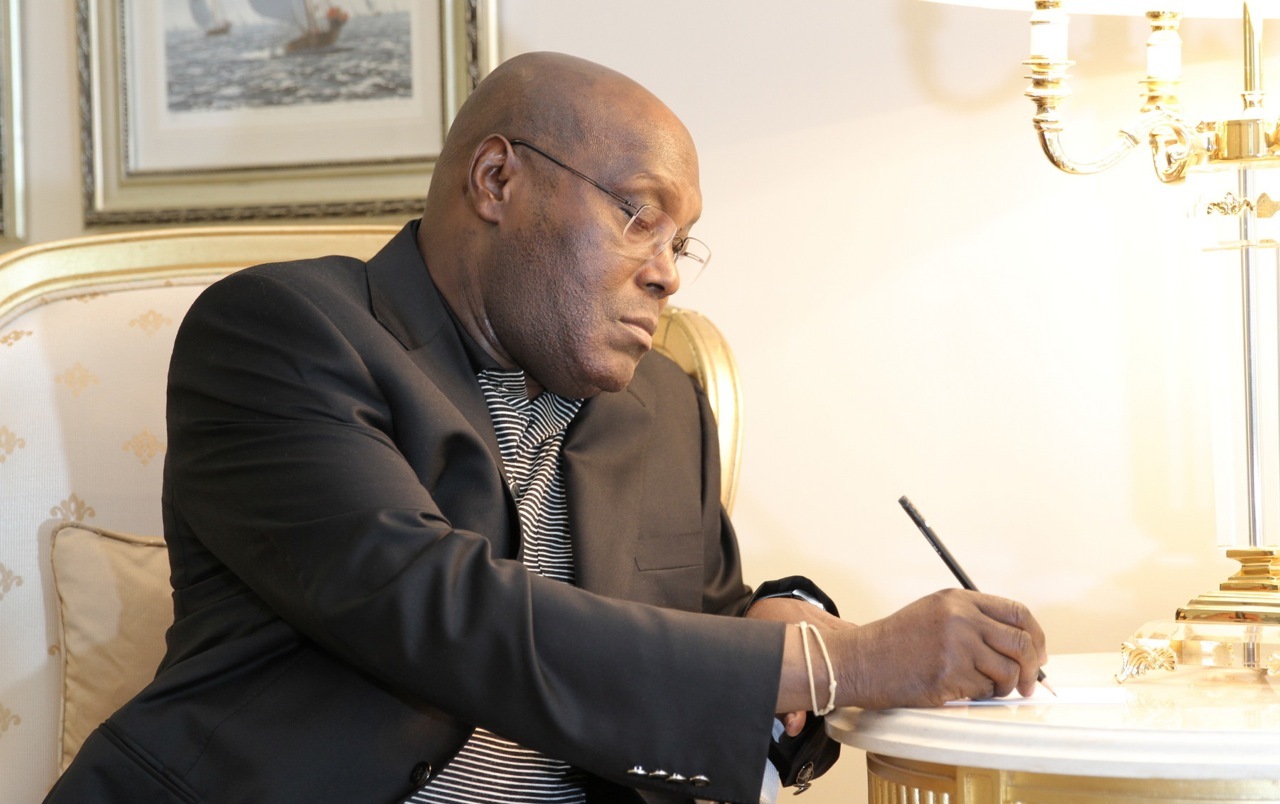
Calls for Alhaji Atiku Abubakar to shield his 2027 ambition and defer to this rotational logic are therefore not expressions of regional hostility but of institutional fairness. A northerner completed his term; a southern president who has delivered measurable security coordination through a northern NSA and substantial infrastructure allocation to the North should be permitted to finish his.
Arewa for Asiwaju has begun to close the gap between elite caution and popular mobilisation. Its combination of structured offline organisation, digital amplification of concrete achievements, and explicit linkage of short-term reform pain to longer-term national and regional gains is repositioning the APC for stronger northern performance. Sustaining this momentum will require continued investment in grassroots structures, consistent messaging on completed and ongoing projects, and disciplined engagement that acknowledges present difficulties without allowing them to erase measurable progress.
The proponents of the movement, its leadership, coordinators and the digital voices who have kept #ArewaforAsiwaju visible and they deserve commendation for the work already done. They have demonstrated that northern support for continuity is not automatic, but can be organised, evidence-based and politically decisive.
By Arc. Joshua Pwajok Panam
Political Strategist and Public Affairs Analyst Writes from Jos.