






















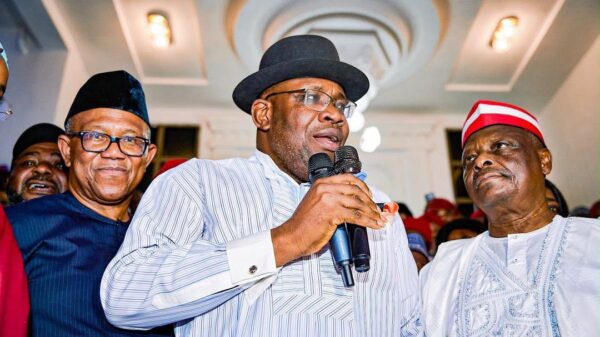

























































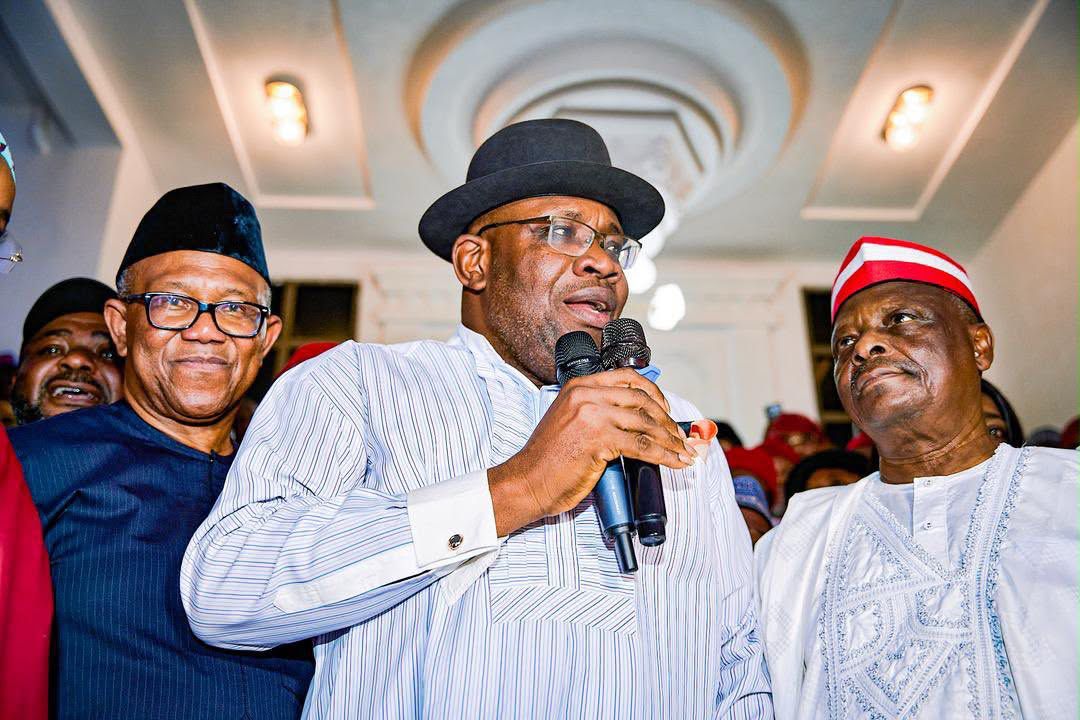
In Nigeria’s fluid and often personality-driven political landscape, where parties frequently serve as temporary platforms for individual ambitions, Senator Henry Seriake Dickson is charting a markedly different path as Founder and National Leader of the Nigeria Democratic Congress (NDC). Under his leadership, the NDC is being deliberately built not as a short-term electoral vehicle but as a durable, ideology-based institution capable of outliving its current crop of leaders.
This deliberate approach to party-building reflects Dickson’s long-held conviction that Nigerian democracy requires strong, values-driven organisations rather than coalitions of convenience. According to him, he has repeatedly said that for Nigeria to survive, the country requires a strong party in government and equally strong opposition parties. while the media, INEC, and the Judiciary play their fair and unbiased roles.
His vision emphasises multi-party democracy, resource control, and genuine restructuring — principles he has consistently advocated throughout his public career, from his time as Attorney General in Bayelsa state through his stints as House of Representatives member, governor of Bayelsa State to his distinguished service in the Senate, where he often stood as a principled and sometimes lone voice championing these causes against the dominant ruling party narrative.
In an era where political expediency often trumps principle, Senator Henry Seriake Dickson stands out as a rare beacon of integrity, selflessness, and commitment to democratic ideals. As the national leader of the National Democratic Congress (NDC), Senator Dickson has consistently demonstrated that true leadership is defined not by convenience, but by conviction, even in the face of intimidation, threats, and political setbacks.
Despite sustained pressure and attempts to undermine his resolve, Senator Dickson has remained firm in his advocacy for a genuine multi-party democracy in Nigeria. He believes strongly that the nation’s progress depends on robust opposition, healthy competition, and the prevention of any drift toward a one-party dominance. This principled stance has not come without personal and political costs, yet he has refused to waver, placing the long-term health of Nigeria’s democracy above short-term gains.
Critics and mischievous elements once peddled propaganda suggesting that Senator Dickson was working for President Bola Ahmed Tinubu. Those claims conveniently ignored the depth of their long-standing relationship, which dates back to their shared days in the Alliance for Democracy (AD). Far from being a liability, this history has only underscored Dickson’s integrity: he has chosen a principled path of constructive opposition, fighting to entrench and deepen multi-party democracy rather than succumbing to any notion of compromise that would weaken democratic pluralism. His record remains spotless, free of the scandals that have tainted many in Nigeria’s political space. He has not let Nigerians down.
Even amid the unexpected challenge and recent court ruling that presented a setback for the NDC, Senator Dickson’s stature has only grown in the eyes of many Nigerians. Far from retreating, he has stepped forward to lead and coordinate the party’s response with characteristic poise, strategic clarity, and resilience. His ability to rally stakeholders, maintain focus on core democratic objectives, and navigate adversity has reinforced public trust. Nigerians across various divides see in him a reliable leader capable of steering the charge for credible opposition and accountable governance.
Central to Dickson’s leadership philosophy is the rejection of the NDC as a mere Special Purpose Vehicle (SPV) for politicians seeking temporary shelter or electoral advantage. Instead, he has insisted on building a party anchored in clear ideology and shared values, one that can be compared, in his own words, to enduring platforms elsewhere that prioritise institutional stability and generational continuity over transient power plays.
This commitment is most visible in his handling of internal party processes. Despite his position as National Leader, Senator Dickson has not issued names, anointed candidates, or imposed individuals at any level across the federation. He has consistently allowed stakeholders in the various states to exercise their democratic rights within the party’s established structures. The party’s internal mechanisms have been permitted to function without top-down interference, reinforcing a culture of genuine participation rather than command and control.
Equally significant is the transparent financial posture he has maintained. No aspirant or stakeholder has been required or even stated that he or she paid any money directly to Senator Dickson or his proxies. All financial obligations have been limited strictly to official party dues, contributions and levies all of which are allowed by the constitution of the party and accounted for, a clear departure from practices that have tainted perceptions of many political platforms in the country.
The recently concluded primary elections exposed structural strains common to direct primary systems operating under tight timelines and with large fields of aspirants. The combination of compressed schedules, an overwhelming number of contenders, and the logistical demands of inclusive processes created openings for confusion, with some individuals prematurely declaring themselves winners in certain areas.
Crucially, party insiders and observers note that the majority of these challenges did not originate from the national leadership. Rather, they were precipitated by the actions of a small number of stakeholders in various states who sought to exploit the situation, either by extracting financial advantages from aspirants or by attempting to impose friends and family members on the party structure. While such conduct reflects a political culture that remains distressingly common in parts of Nigeria, it stands in direct contradiction to the standards Senator Dickson and the NDC leadership have publicly condemned.
In several instances, Like in the South-East, all arrangements were brought by the presidential aspirant. In most cases, party elders, state chairmen and their officials handled the processes, and no one can claim that Senator Dickson imposed or brought a candidate upon any state.
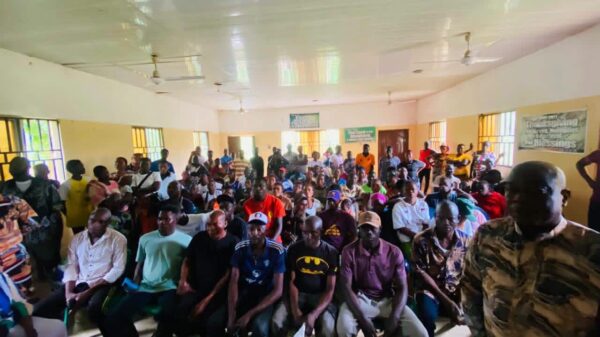
Party elders, state party chairmen, their executives, and officials deployed to supervise processes exceeded their briefs, engaging in activities inconsistent with the party’s guidelines and code of conduct. For more than six months, Senator Dickson has personally led efforts to manage the resulting fallouts, prioritising reconciliation among aggrieved aspirants and the restoration of internal cohesion.
No one can claim that any demand was made and people around Senator Dickson know the standard he has upheld over the years.
Nowhere has Dickson’s commitment to letting the system operate freely been more clearly demonstrated than in Bayelsa State, his home state. He did not in any way influence the outcome of the primaries there. The people and the established party structures were allowed to make their choices without external pressure from the national leader. His subsequent role has been limited to managing the post-primary grievances as the party’s overall leader, ensuring fairness and unity rather than dictating results.
Interventions by the national leadership, where they occurred at all, were rare and narrowly focused on protecting the most vulnerable — women, persons with special needs, and young aspirants who risked marginalisation amid the intense competition.
At different times, individuals unilaterally declared themselves winners, and his responsibility has been to determine the true situation and resolve disputes where necessary. That is exactly what he has been doing, and all aspirants understand, respect and appreciate this effort.
A few disgruntled and mischievous individuals may choose to make loud allegations in an attempt to attract attention, but they have no facts to substantiate their claims. Senator Dickson’s integrity throughout this process remains unassailable, and this is evident to the thousands of people who have interacted with him over the last five to six months.
Throughout his political journey, from his governorship bid to his time in the Senate, he has consistently stood as a lone voice for opposition where necessary. What he is doing today through the NDC is aimed at strengthening and stabilising Nigeria’s multi-party democracy, and Nigerians appreciate and respect this effort.
Many people have come into this party because of the trust and confidence they have in his integrity. It is gratifying that, through all these experiences, that his integrity has not only endured but has become even stronger and more firmly established.
A defining feature of Dickson’s approach has been his willingness to devolve responsibility appropriately. In structuring the primary processes, he empowered the party’s presidential candidate, Mr Peter Obi, and vice-presidential candidate, Senator Rabiu Kwankwaso, to play leading roles in identifying and supporting stakeholders in their respective zones.
In the South-East, it was Peter Obi who nominated the stakeholders overseeing the primary processes. In Kano and the broader North-West, Rabiu Kwankwaso performed a similar role. In key states including Edo, Lagos, Delta, and the Federal Capital Territory, Obi and his team directly supervised aspects of the process.
This decentralised model underscores that many of the difficulties that later emerged stemmed from compromises or capacity gaps at the state stakeholder level, rather than from any failure of oversight or direction from the national leadership. Senator Dickson’s subsequent interventions focused on addressing those state-level shortcomings and restoring confidence in the party’s internal democracy.
Through these actions, Senator Seriake Dickson has demonstrated a rare combination of strategic vision, patriotic commitment to national restructuring and democratic deepening, and personal integrity. He has refused to personalise power, rejected the temptation to impose candidates, and insisted that the party’s systems, however imperfectly tested by rapid growth and direct primaries, must be allowed to function and be strengthened through experience.
The challenges the NDC has faced are real, but they have also served as a stress test that is clarifying the party’s character. By managing controversies with restraint, prioritising reconciliation, and refusing to compromise on core principles, Dickson is laying the groundwork for an organisation that can endure beyond any individual, including himself.
As Nigeria prepares for the 2027 elections, the NDC under his leadership offers a compelling model: a political party that aspires to be more than an electoral machine, one that seeks to institutionalise values, protect internal democracy, and contribute to the long-term maturation of the country’s democratic culture. Senator Dickson remains resolute in that mission.
Asso. Professor. Magnus Maduka Anichebe is a Detroit, Michigan Based Political Scientist, Researcher and Public Affairs Analyst.