









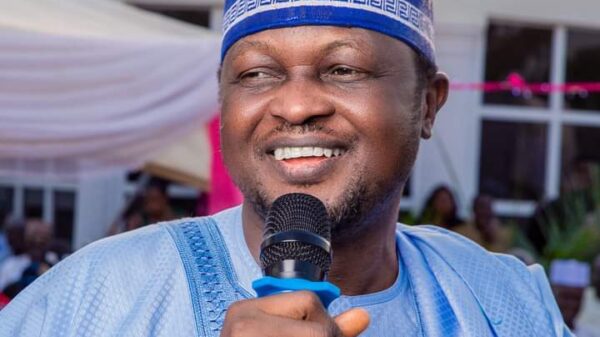






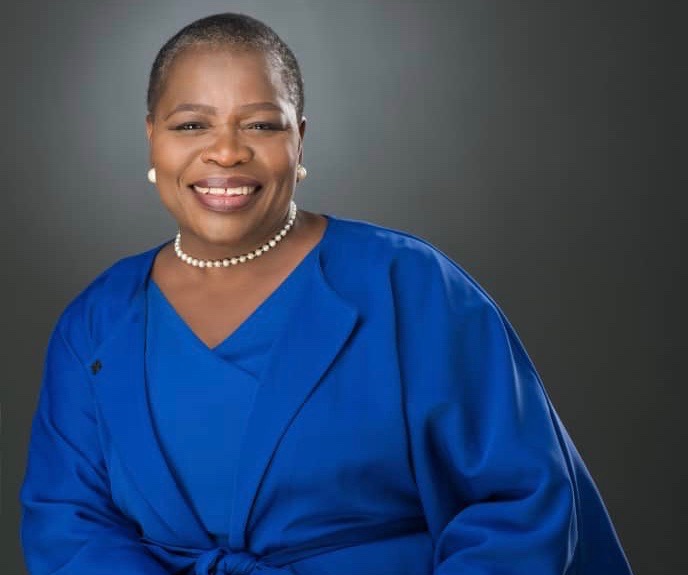

























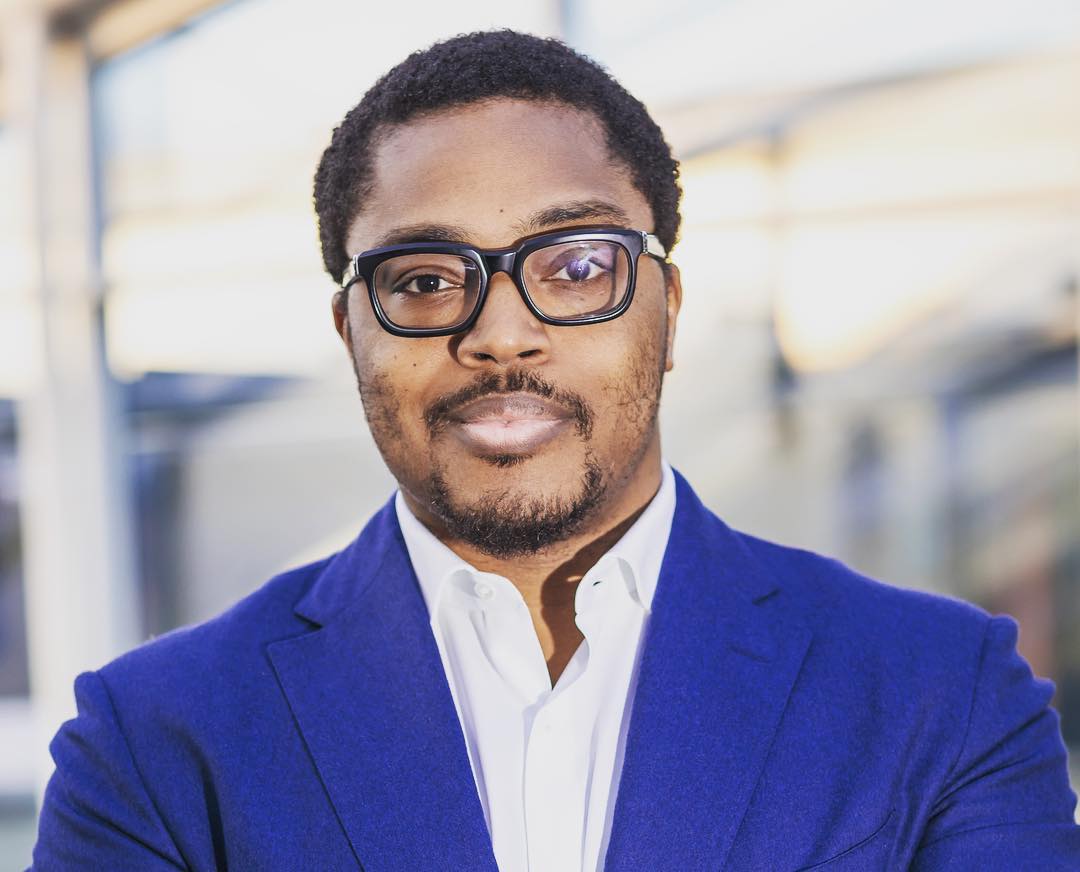


Prof. AbdulKareem Adedeji, Executive Director, Centre for Citizens Participation and Democratic Development.
There are moments in politics when neutrality is not merely a virtue, it is a necessity.This is one of such moments.
As the internal crisis rocking the All Progressives Congress (APC) in Kwara State continues to deepen, reports have emerged that a delegation aligned with Governor AbdulRahman AbdulRazaq made up of his faction of the party’s leadership at the state who have continued to aid and abet his sustained assault on the party’s unity and diminish its electoral viability through their divisive tendencies which has finally resulted in the full blown crisis the state is currently embroiled in may be heading to Abuja to engage key party leaders and influential stakeholders in what many now perceive as an attempt to project an image of consensus where none presently exists.
To bolster their ranks and create a sense of state-wide appeal, they have coerced all first class traditional leaders to join the delegation on a mission to cover up for the lingering post primaries crisis through an arranged appreciation visit to Mr. President in a manner that suggests that their subjects are happy with the Governor and his choice of hand-picked party candidates.
Ordinarily, there is nothing unusual about political consultations.Stakeholders consult. Governors consult, party leaders consult and even aspirants consult, that is politics.
However, Kwara is no longer dealing with an ordinary political disagreement. The state is presently confronted with a legitimacy crisis arising from all the party primaries particularly the governorship primary process; a crisis that has generated public concerns from party elders, current and former senators, house of representative members, youth organisations, civil society groups, professionals, grassroots stakeholders and several governorship aspirants and over 200 other aspirants who contested for different positions under the party’s banner. Weeks after the exercise, the controversy has not subsided, instead, it has expanded, thanks to the lacklustre attitude of the state Governor.
Questions continue to be raised about the process, its transparency and legitimacy. Questions continue to be raised about what transpired between the commencement of the primary exercise and the eventual declaration of a winner.
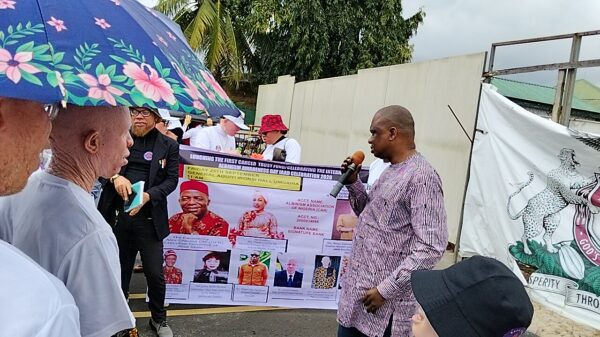
Those questions have now found expression in public advocacy, organised stakeholder engagements, press conferences, formal communiqués and even legal proceedings.
Whether one agrees with those concerns or not is no longer the issue.The issue is that they exist and they are now widespread.
Another major issue is that they involve individuals and groups who have invested years building the APC in Kwara State and the crisis has refused to disappear.
It is against this backdrop that reports of a high-powered Abuja lobbying effort should concern every genuine progressive and, most importantly, the Presidency itself because perception in politics is often more consequential than reality.
A visit intended as consultation can easily be interpreted as endorsement. A courtesy call can become political validation and a photograph can become propaganda just as the handshake of Mr. President with the hand-picked candidate that the Governor is attempting to foist on the people during a harmless Sallah visit was interpreted as Mr. President’s endorsement of that candidate even though there are sufficient account suggesting a different reality. And once that perception takes hold among party members and the wider electorate, reversing it becomes extraordinarily difficult.
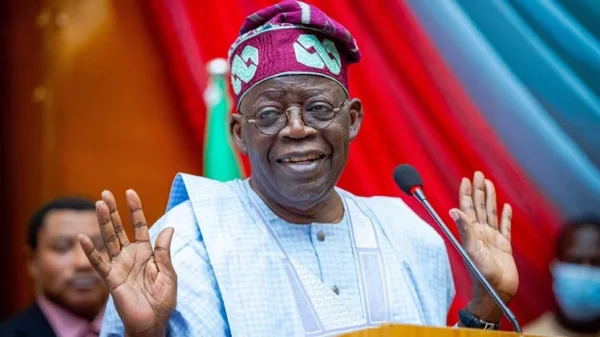
This is why President Bola Ahmed Tinubu must exercise utmost caution at this critical point in time.
The President must remember that he is no longer merely the national leader of APC, he is the President of the Federal Republic of Nigeria and he is expected to rise above factional disputes.
He is expected to be a father to all and also a symbol of fairness. Most importantly, he is expected to ensure that no group, regardless of its access to power, appropriates the moral authority of the Presidency to settle unresolved political contests.
The current disagreement in Kwara is not between enemies. It is a disagreement among members of the same political family. Many of those expressing concerns today stood firmly with APC during difficult times. Many contributed to building the political movement that produced the present government and many remain committed to the success of President Tinubu and the Renewed Hope Agenda and their concerns cannot simply be dismissed nor can they be resolved through optics.
The issues being raised require answers, the divisions require engagement, the tensions require reconciliation and above all, the situation requires fairness. History repeatedly teaches the same lesson.
Unity imposed from above rarely endures but unity built upon legitimacy survives. That is why the Presidency must resist any attempt, intentional or otherwise to create the impression that it has already chosen a side in a matter that remains deeply contested among stakeholders.
THE TRADITIONAL INSTITUTION MUST NOT BE DRAWN INTO FACTIONAL POLITICS
Perhaps the most troubling dimension of the reported Abuja engagement is the suggestion that prominent first-class traditional rulers may be part of the delegation. If true, this raises serious questions that go beyond politics. Traditional rulers are not party officials and they cannot be converted into campaign directors.They are not political operatives rather they are fathers to all and they belong equally to every stakeholder, every aspirant, every political tendency and every citizen within their domains. Their authority is moral before it is ceremonial and their influence derives from the confidence of the people that they stand above temporary political contests and remain custodians of the collective interest.
This is precisely why they must be careful not to allow themselves to be perceived as instruments in unresolved political disputes.The current controversy in Kwara is not a settled matter. Party elders are speaking, former senators are complaining,civil society organisations are agitating,youth groups are protesting,professionals are advocating and stakeholders are demanding for justice. Sadly, even the courts are now being invited to wade into the matter. In such circumstances, wisdom demands caution and royal fathers should be seen as mediators, not participants.
They should be seen as guardians of peace, not advocates for one side of a disagreement. They should be seen as protectors of legitimacy, not instruments for manufacturing it. They should understand the fact that political office holders are temporary because Governors come and go. Speakers come and go, party chairmen come and go and even political administrations come and go but traditional institutions endure.
That is why royal fathers must be vigilant in protecting the dignity, neutrality and moral authority of their stools. No temporary political arrangement should be allowed to diminish institutions that predate governments and will outlive them. Indeed, moments such as this demand moral courage from traditional institutions. The people look to their royal fathers not merely for ceremonial leadership but for moral guidance when politics becomes turbulent. This is such a moment.
The traditional institution should stand where it has always stood; above the fray, respected by all sides, trusted by all stakeholders and available to all parties. Anything less risks weakening an institution whose greatest strength lies in its impartiality.
WHY THE PRESIDENT SHOULD BE CONCERNED
The danger before the Presidency is not merely a Kwara problem. It is a political perception problem. Should one faction in an unresolved dispute be seen entering Abuja with influential political actors and traditional rulers in tow, the inevitable narrative among ordinary party members will be that the Presidency has taken a position. Whether that narrative is true or false becomes almost irrelevant.
Perception becomes reality and once the impression is created that the President has endorsed one side before the underlying concerns have been addressed, the political consequences may be difficult to reverse.
Unfortunately, those promoting today’s political tensions will not bear the long-term consequences, the Presidency will, the APC will and the candidates who must eventually face the electorate will. The irony is impossible to ignore.
The political movement that brought APC to power in Kwara was built upon opposition to political domination, exclusion and predetermined outcomes.
O To Ge was not merely a slogan, it was a declaration that power ultimately belongs to the people. It was a demand for openness, participation and accountability. Today, many Kwarans are asking whether those principles still matter. Those questions deserve answers not because they come from the opposition but because they are increasingly coming from within the progressive family itself. That is what makes them significant.
THE PRESIDENT MUST REMAIN THE FATHER OF ALL
President Bola Ahmed Tinubu’s greatest political strength has never been the power of office alone. It has been his reputation as a builder of coalitions, a manager of competing interests and a leader capable of accommodating diverse tendencies within a common political platform, that reputation was built through consultation.
It was built through inclusion, fairness and the ability to listen even when opinions differed. That reputation should not be placed at risk because of an unresolved state-level political dispute. The President must resist every attempt to drag his office into local political battles. He must resist every effort to convert presidential access into political legitimacy. He must resist every attempt to use the image of the Presidency as a substitute for genuine reconciliation.
Most importantly, he must resist every effort to create the impression that he has chosen a side in a matter that remains the subject of intense political, legal and public controversy. The role of a father is not to embrace one child while ignoring the concerns of others. The role of a father is to listen to all sides, ensure fairness and restore confidence. That is the role history now demands of President Bola Ahmed Tinubu, GCFR.
Because the issue before Kwara today is bigger than one primary election. It is bigger than one candidate, one governor, or one faction. It is about legitimacy, democratic credibility and public confidence and increasingly, it is about whether the Presidency will be seen as an impartial arbiter or an unwilling participant in a dispute that continues to divide stakeholders across Kwara State.
Mr. President must not allow his office to become the instrument through which unresolved questions are buried. He must ensure that his office remains what Nigerians expect it to be:
A symbol of fairness. A refuge for justice. And a father to all.